
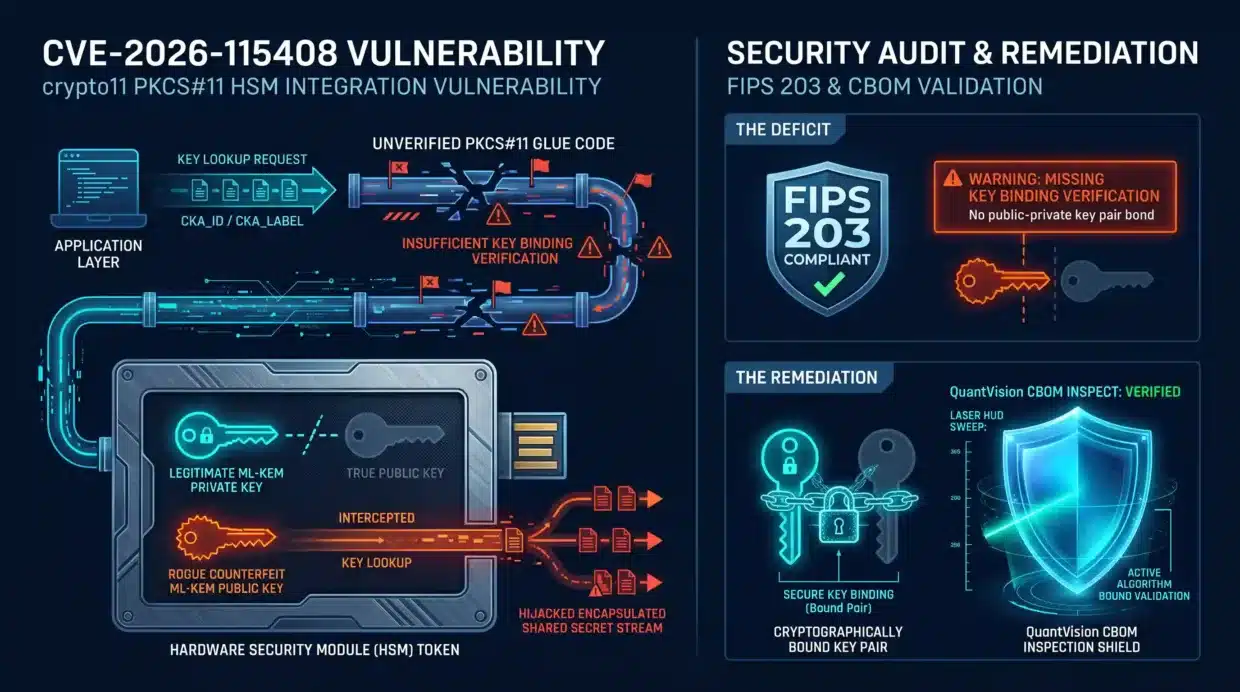
Your ML-KEM rollout can be fully FIPS 203-compliant and still leak every shared secret it generates. The bug isn’t in the lattice math — it’s in the plumbing underneath it. WHAT SHIPPED: Eclipse Keypont’s crypto11, a Go PKCS#11 binding widely … Read More
ML-KEM & Implementation Security
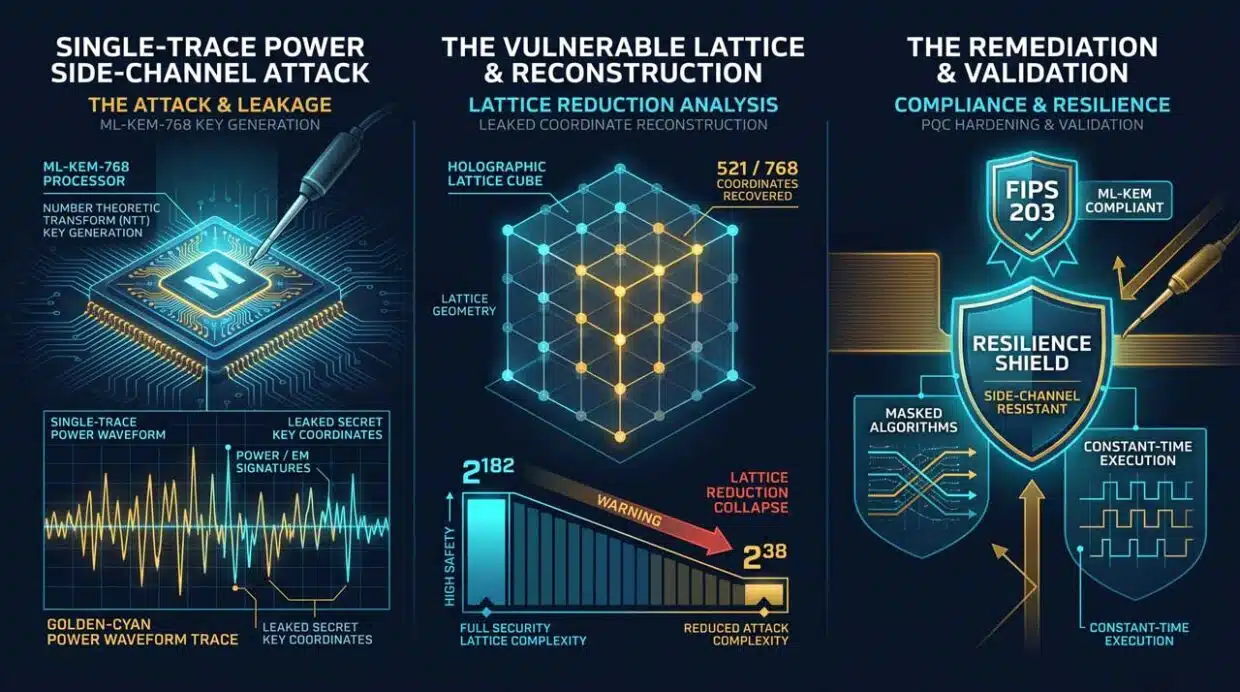
The math behind ML-KEM held up—the chip implementation didn’t. Why PQC vendor evaluations must test beyond the spec.
Your ML-KEM private key doesn’t need a breached server to leak — a single power trace captured during key generation is enough. That’s the result Radboud University researcher Vahid Jahandideh presented this week (Nov 15–19) at ACTIVE ’26, an ACM … Read More
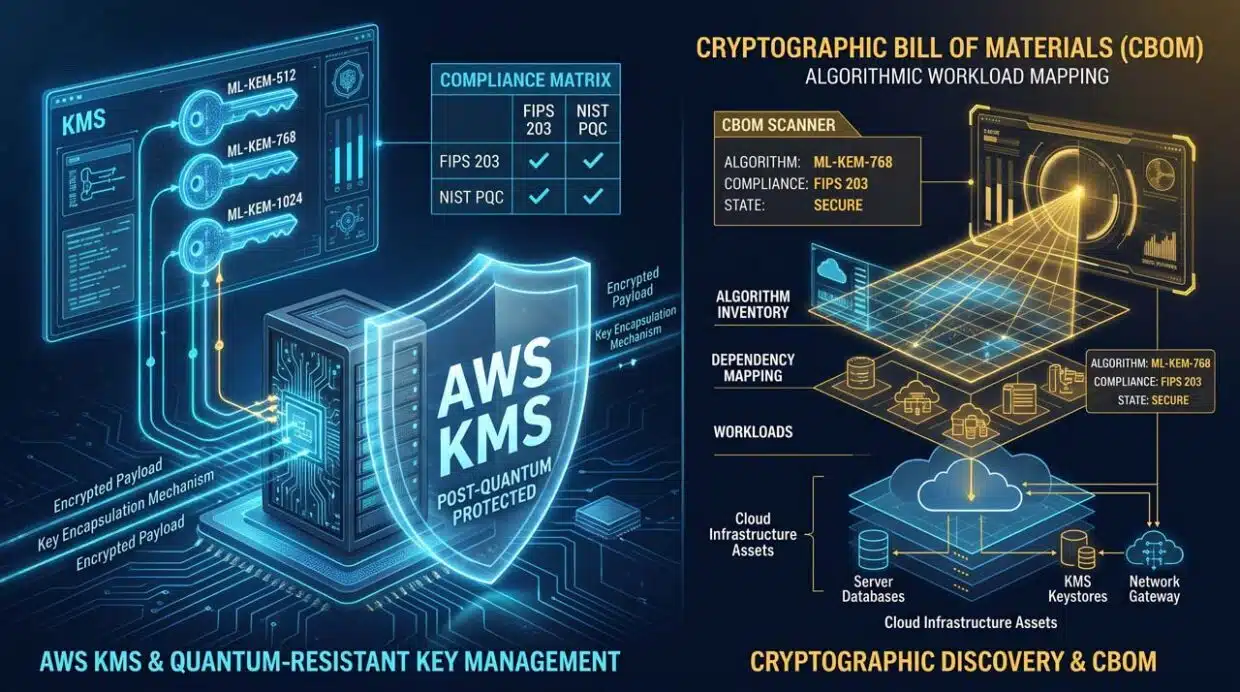
AWS KMS just shipped native ML-KEM support: Why picking the wrong parameter set leaves a compliance gap
AWS Key Management Service just shipped native ML-KEM support. Before you check the “post-quantum” box, know that it gave you three different algorithms to choose from — and picking the wrong one can leave you non-compliant while feeling done. What … Read More
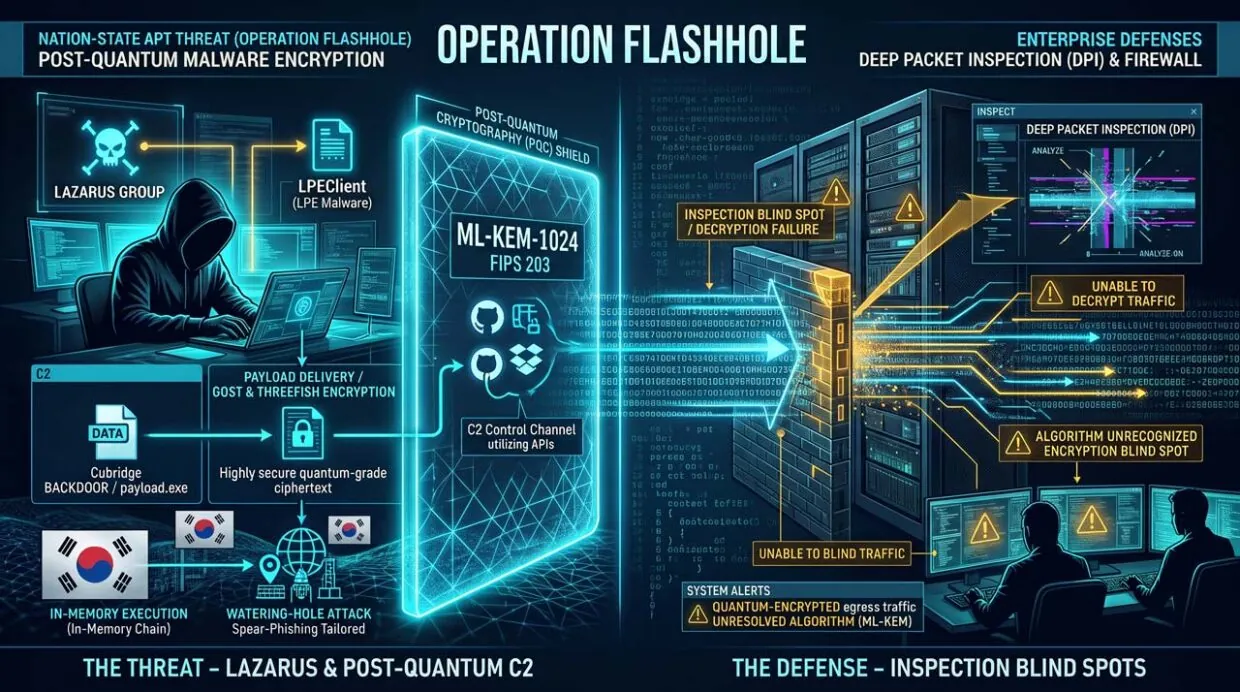
Lazarus is already using ML-KEM-1024 to hide C2 traffic. Is your DPI inspection PQC-aware?
Lazarus beat most Fortune 500 security teams to post-quantum crypto — and it didn’t need a compliance deadline to get there. At Kaspersky’s Security Analyst Summit in Bali this week, GReAT researchers disclosed Operation FlashHole: a Lazarus campaign against South … Read More
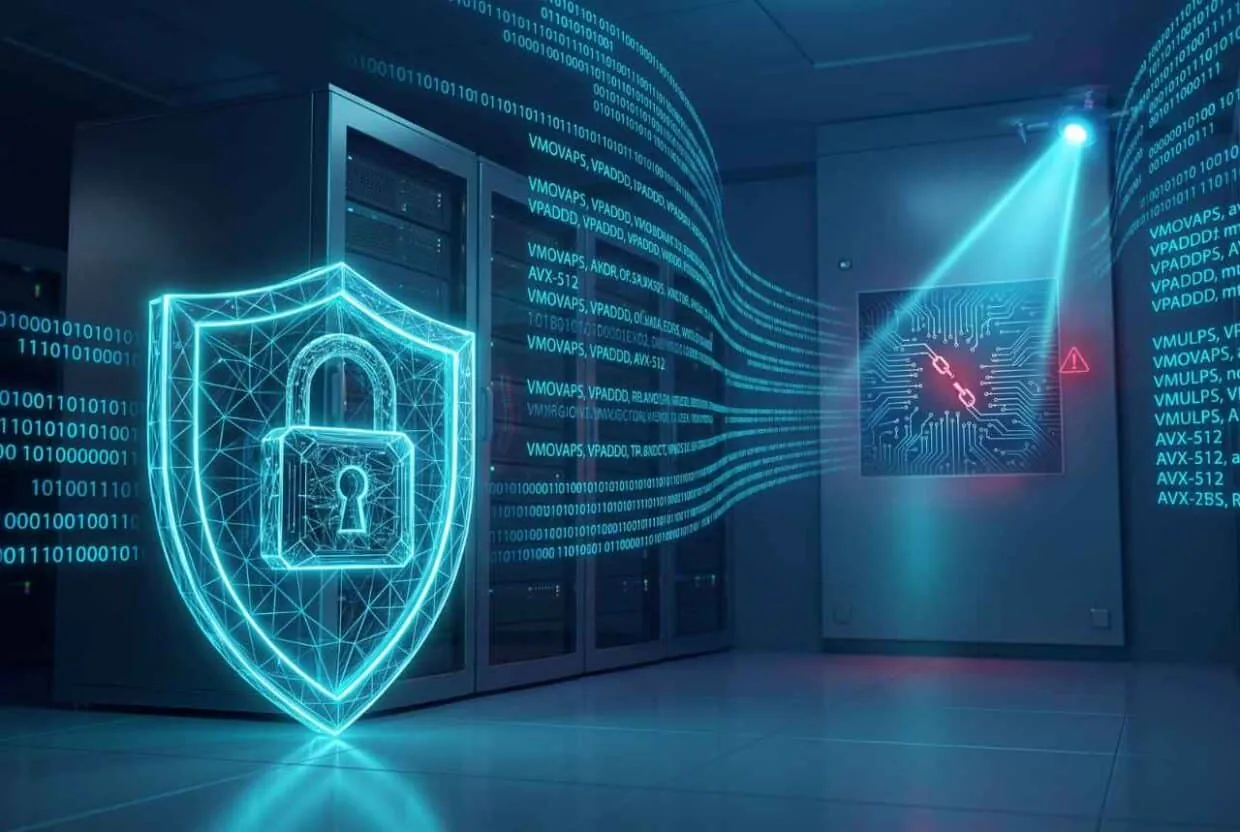
ML-KEM is mathematically sound. The library shipping it wasn’t — and for eight months, nobody noticed
ML-KEM is mathematically sound. The library shipping it wasn’t — and for eight months, nobody noticed. In August, researchers (including Anthropic’s Nicholas Carlini) disclosed two implementation flaws in wolfSSL’s hand-optimized ML-KEM decapsulation code. Both are now patched, but the mechanism … Read More
Your quantum-safe data is secure from eavesdroppers. But what happens when an attacker uses Post-Quantum Cryptography (PQC) as a weapon against you?
Enter EPER (Encrypt with PQC, Enforce Ransom). We’ve spent years talking about HNDL (Harvest Now, Decrypt Later), the threat of adversaries stealing our data today to crack it with a quantum computer tomorrow. But the threat landscape has flipped. In … Read More