

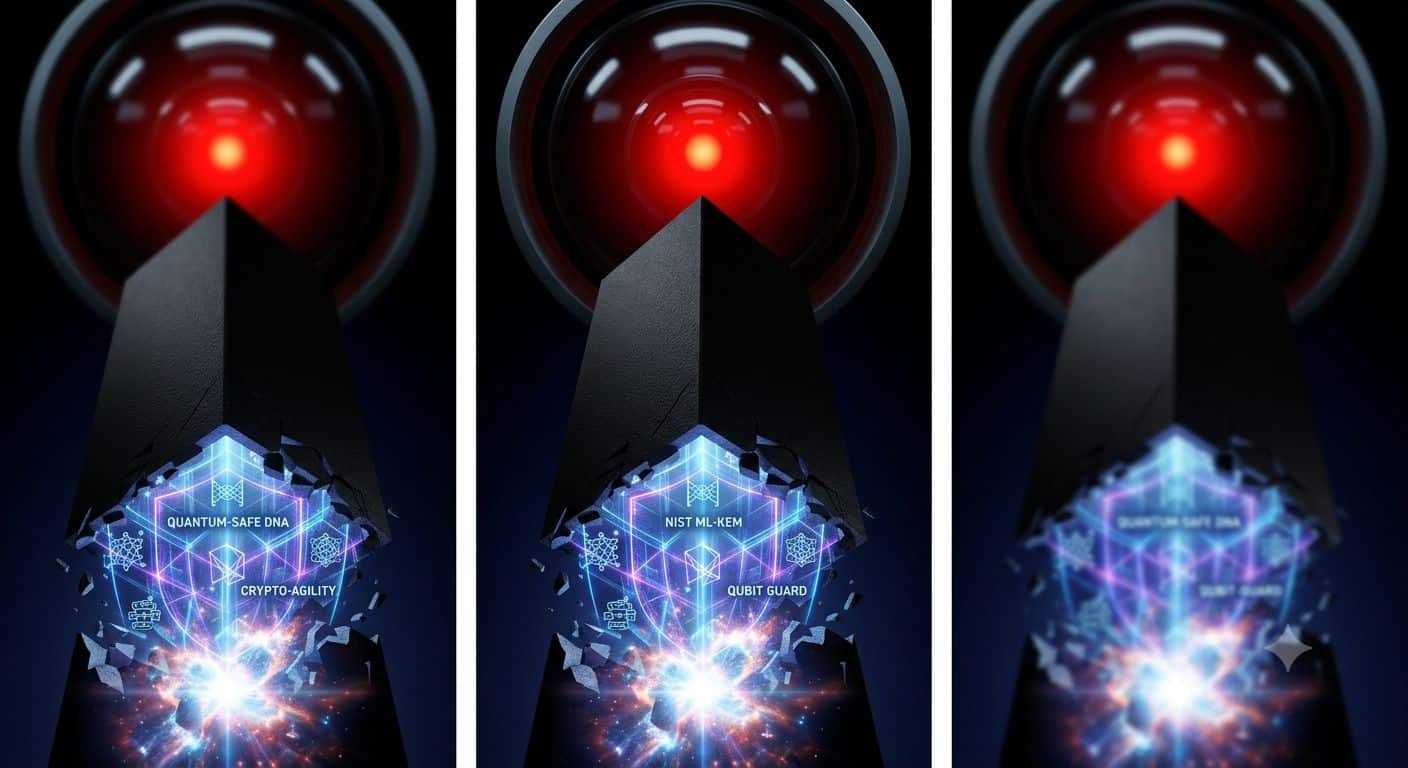
Enter EPER (Encrypt with PQC, Enforce Ransom).
We’ve spent years talking about HNDL (Harvest Now, Decrypt Later), the threat of adversaries stealing our data today to crack it with a quantum computer tomorrow. But the threat landscape has flipped.
In an EPER attack, bad actors breach your network and actively encrypt your infrastructure using quantum-resistant algorithms. They essentially lock you out with a digital padlock that even a future quantum supercomputer can’t break.
To survive this era, we need more than just “stronger” encryption. We need smarter mathematical architecture.
That’s where CLWE (Ciphertext-Leveraged Learning With Errors) changes the game.
Standard LWE algorithms (like ML-KEM) are fantastic at passive defense. But CLWE is built for the active quantum battlefield. Here is why it’s a massive leap forward:
🔹 Dynamic Noise Bounding: Traditional lattice cryptography struggles with “noise growth”—the more you process the data, the sloppier it gets. CLWE binds the error directly to the ciphertext structure, keeping it hyper-efficient. 🔹 Continuous Domain Sampling: By shifting the math into a continuous domain before standardizing it, CLWE slams the door on advanced quantum shortcuts that exploit standard, predictable discrete spacing. 🔹 Zero-Knowledge Verifiability: This is the antidote to EPER. CLWE allows automated defense agents to verify the structural integrity of ciphertext instantly. If an unauthorized entity tries to lock down a file using PQC, the network detects the anomaly with negligible computing power.
Securing our future isn’t just about making keys that are harder to break; it’s about building networks that can spot a weaponized algorithm in real-time.
Are your current Post-Quantum migration strategies accounting for active threats like EPER, or are you still just focused on passive data harvesting?
Let’s discuss in the comments.
hashtag#PostQuantum hashtag#Cybersecurity hashtag#Cryptography hashtag#CLWE hashtag#QuantumC