

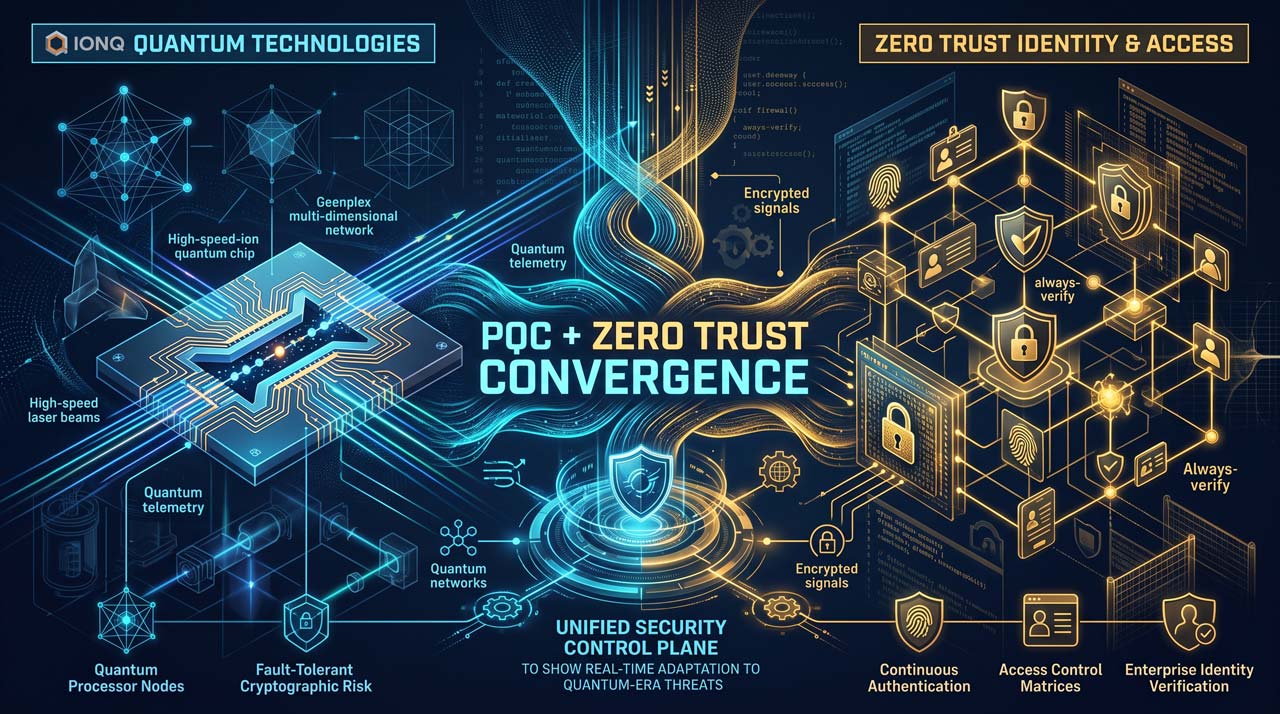
A quantum computing company just paid up to $1.3 billion to buy a zero-trust access control vendor. If that pairing seems odd, look closer — it’s exactly where enterprise security is headed.
On October 9, 2026, IonQ announced it’s acquiring Elisity, whose IdentityGraph platform sets least-privilege access policies for users, devices, workloads, and AI agents independent of the underlying network. Here’s what CISOs should take from the deal:
The thesis, stated plainly. Elisity’s CEO put it well: access controls reduce exposure, but cryptographic upgrades fix the underlying weakness. IonQ is betting customers need both running as one program, not two separate initiatives with separate owners and budgets.
Crypto inventory meets identity risk. The companies plan to feed cryptographic inventory and risk data directly into IdentityGraph — so migration priority for ML-KEM and ML-DSA upgrades gets set by business risk and exposure, not by which system gets audited first.
The urgency framing. IonQ’s CEO: “Q-Day is coming much faster than predicted.” Whether or not you buy the accelerated timeline, the deal shows a major quantum vendor betting that PQC and zero-trust architecture are converging into a single control plane — not staying as adjacent checkboxes.
Bottom line: if your zero-trust rollout and your crypto-agility roadmap still sit in separate tickets with separate owners, you’re already behind where the market is consolidating. The deal is expected to close in Q4 2026 — worth watching how the integration actually ships.
How is your organization connecting identity/access policy to crypto-migration priority — one program, or two?
At Qubit Guard, we built QuantZTNA around the same idea: PQC-hardened zero-trust access (hybrid X25519+ML-KEM-768, ML-KEM-1024) that treats network access and quantum-safe crypto as one control plane, not a bolt-on.
#PostQuantumCryptography #PQC #ZeroTrust #Cybersecurity #CryptoAgility #CISO #QuantumSafe #InfoSec